
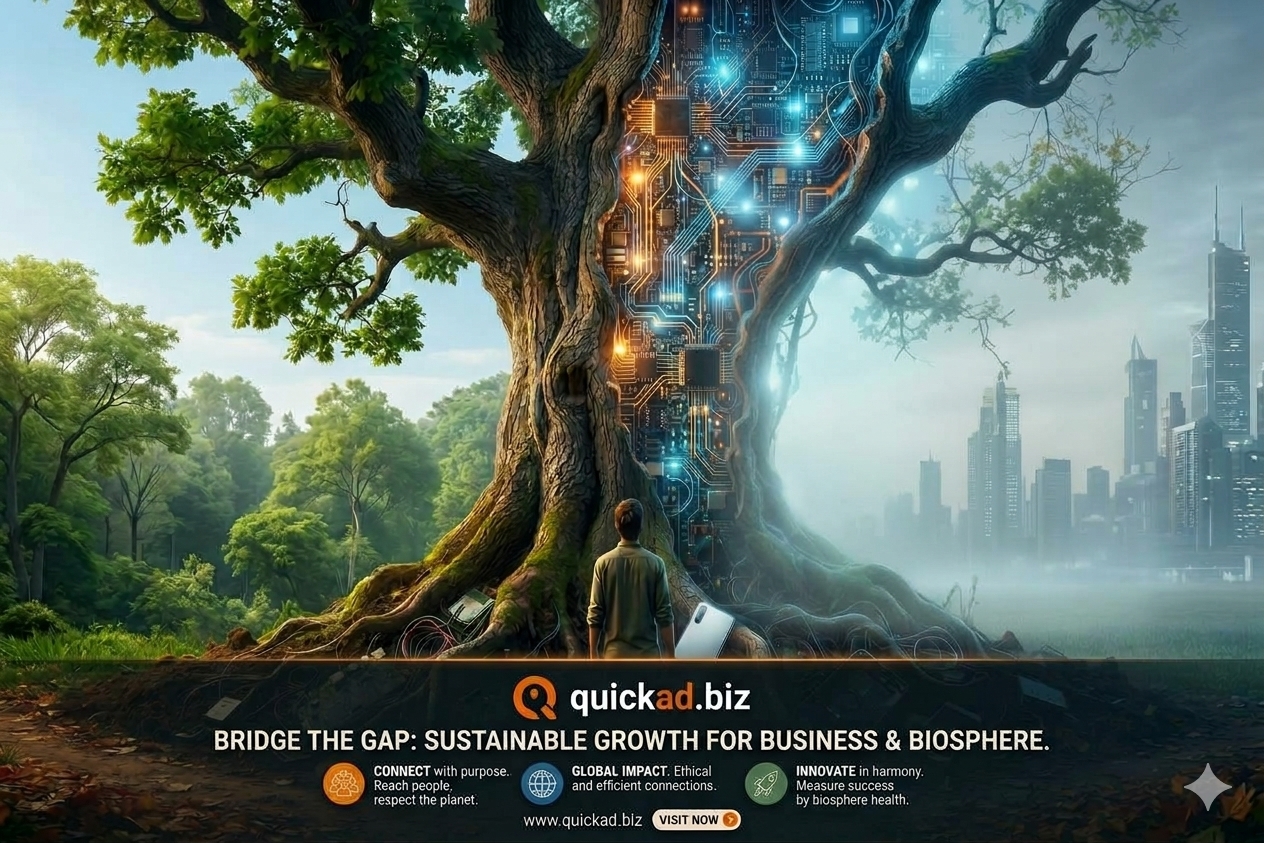
The true measure of human progress has been hijacked by the gleam of silicon and the promise of the next digital frontier. We live in an era that equates technological sophistication with existential salvation. Every global crisis, from disease to systemic poverty, is met with the same enthusiastic refrain: technology will fix it. Yet, as our gadgets grow smarter and our processing speeds double, a profound truth remains ignored: tech advancements cannot cure human suffering at its core, and compromising Mother Nature to achieve them is a losing bargain.
We are caught in a cycle of ecological debt, strip-mining the Earth’s finite resources to power a virtual world. Rare earth minerals are gouged from the soil, pristine forests are cleared for data centers, and rivers are polluted by electronic waste. This destruction is justified under the guise of innovation. We are told that these sacrifices are necessary steps toward a brighter, more connected future.
However, this logic suffers from a fatal flaw. The fundamental aches of the human condition—loneliness, anxiety, the search for meaning, and the pain of injustice—are not software bugs that can be patched with an upgrade. An algorithm cannot manufacture genuine human connection. A faster smartphone cannot cure the grief of a lost loved one, nor can a virtual reality headset replace the grounding peace of walking through an ancient forest. By sacrificing the living world for technological progress, we are trading our foundational well-being for superficial convenience.
In fact, our obsession with digital displacement often amplifies the very suffering we seek to escape. The more we disconnect from the natural rhythms of the earth, the more anxious and isolated we become. Nature is not merely a resource pile to be converted into microchips; it is the biological anchor of our physical and mental health. Clean air, living soil, and vibrant ecosystems are the non-negotiable prerequisites for human flourishing. When we degrade them, we directly degrade ourselves.
True advancement lies not in outsmarting nature, but in learning to live within its boundaries. We must shift our cultural focus from relentless tech-fetishism to ecological stewardship. Innovation should be measured by how well it harmonizes with the biosphere, not by how effectively it exploits it.
Technological tools have their place, but they must remain subordinate to the living world. If we continue to bankrupt Mother Nature to build an artificial paradise, we will eventually find ourselves trapped in a high-tech wasteland—highly connected, boundlessly efficient, and profoundly miserable. It is time to recognize that the healing of human suffering begins with the healing of our relationship with the Earth.